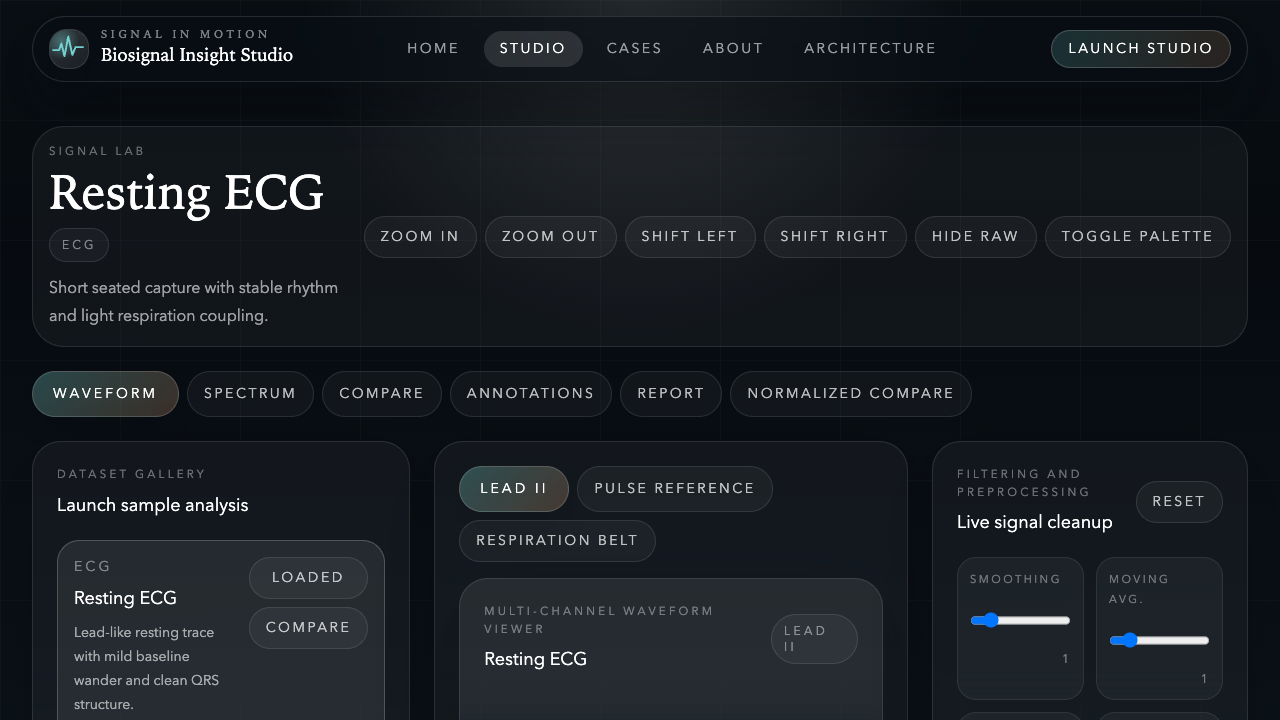
Educational analysis workspace with sample or synthetic signals.
01 / Context
The problem
Signal-processing steps are easier to understand when the original signal, its transformed views, and the analysis settings stay connected. A useful learning workspace lets people inspect those relationships directly.
02 / Ownership
My contribution
I built a browser-based workspace for ECG, EMG, PPG, respiration, and synthetic signals, with filtering, FFT, spectrogram, annotation, and export workflows. The emphasis is transparent exploration and review rather than diagnostic conclusions.
03 / Architecture
How it works
01
Inspect
Open a sample or synthetic signal and review its time-domain behavior.
02
Transform
Compare filtering and frequency-domain views, including FFT and spectrograms.
03
Annotate
Mark intervals and preserve context alongside the signal.
04
Export
Create a reviewable report of the analysis and selected views.
04 / Validation
Evidence & scope
Public source and an interactive educational studio.
Analysis and report-preview interfaces shown in the portfolio captures.
Client-side workflows for exploring signals and analysis settings.
Project scope
Educational prototype using sample or synthetic signals. Not a medical device, diagnostic service, or clinically validated research tool.
An analysis interface should make transformations understandable. Keeping settings, views, and annotations together helps a reviewer explain how a result was produced.
 Avi Patel