08 / Sensing & Control
Autonomous bowling robot
A camera-guided tabletop robot connecting target selection, carriage motion, and a coordinated ball release.
MATLAB · Simulink · Arduino · HSV vision
Physical team prototype2025
 Avi Patel
01 / Clemson Institute of Human Genetics · Seven-person team
Small subjects. A whole system to understand.
Computer vision and assay software for a team-built fruit-fly research automation platform, recognized with a People's Choice Award.
01 / Context
Preparing and observing fruit flies combines repetitive laboratory work with a difficult perception problem: very small, moving subjects whose appearance and position change. Useful automation has to connect what a camera detects with what the physical handling system can actually do.
02 / Ownership
I implemented channel detection and climbing-assay vision, and co-developed classification, database, and interface components. I worked within a seven-person team; the specimen-handling mechanism, electronics, motion control, and broader integration were shared across teammates.
03 / Architecture
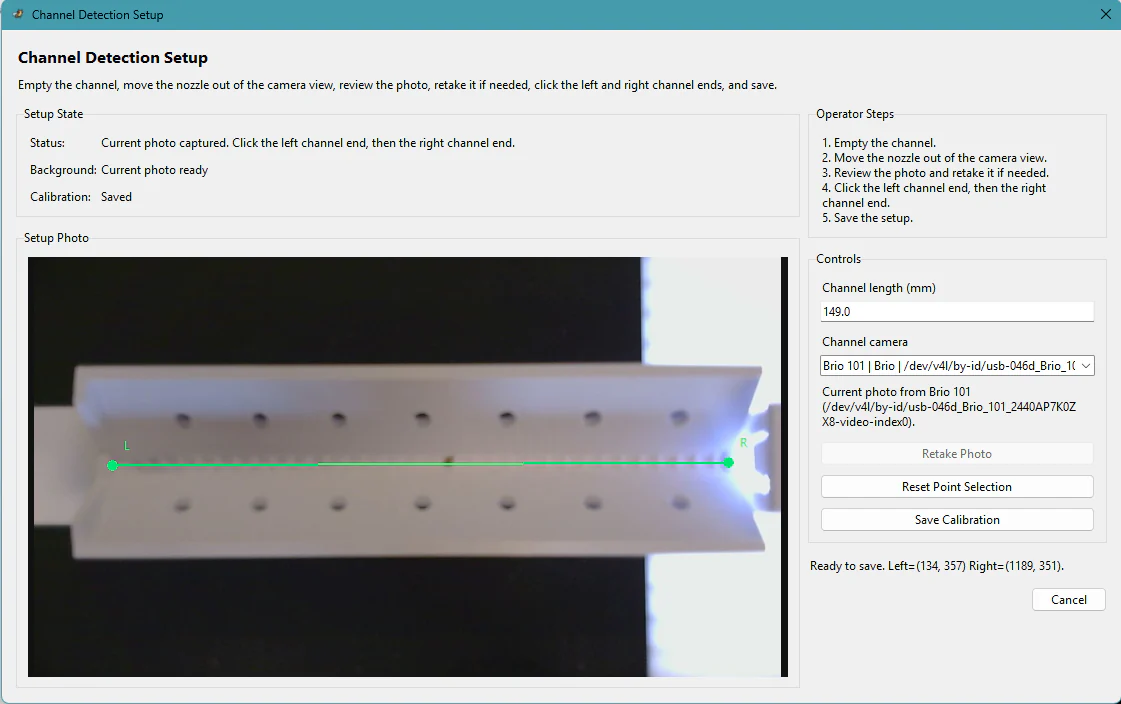
Channel vision identifies subjects within the physical research workflow.
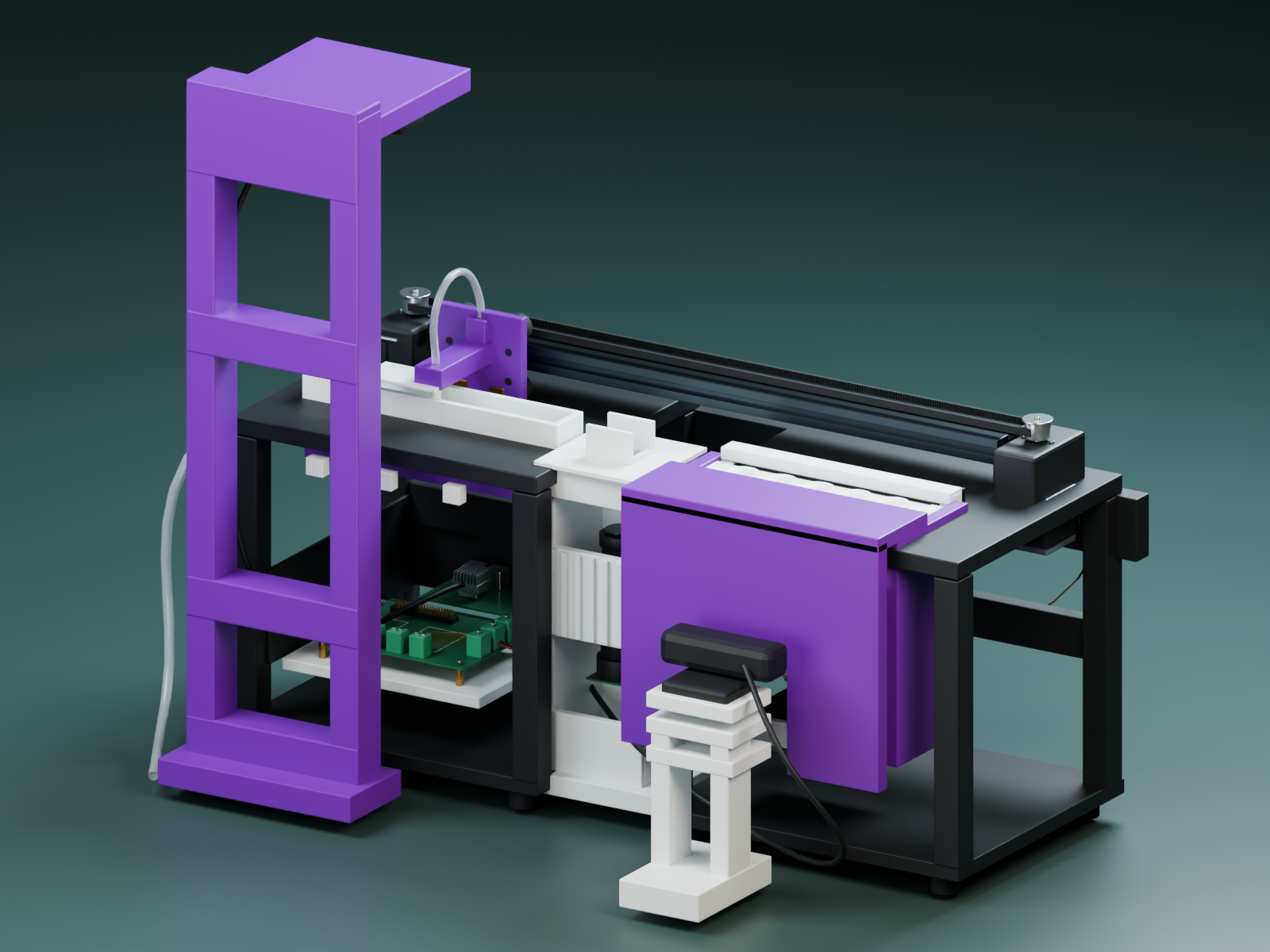
A three-camera team system connects perception with motion, specimen handling, and Raspberry Pi control.
Climbing-assay views and tracking summaries turn movement into information researchers can inspect.
Classification, stored results, and the interface support review of the experiment.
04 / Validation
Research prototype and subsystem evaluation. Sustained autonomous research use and achieved throughput are not established here.
05 / Perspective
Image classification, detection, physical pickup, and a complete assay have different failure modes. Evaluating each stage separately makes an integration problem easier to understand than reducing the whole platform to one accuracy number.