MATLAB · Simulink · Arduino · HSV vision · Motor control · Servo actuation
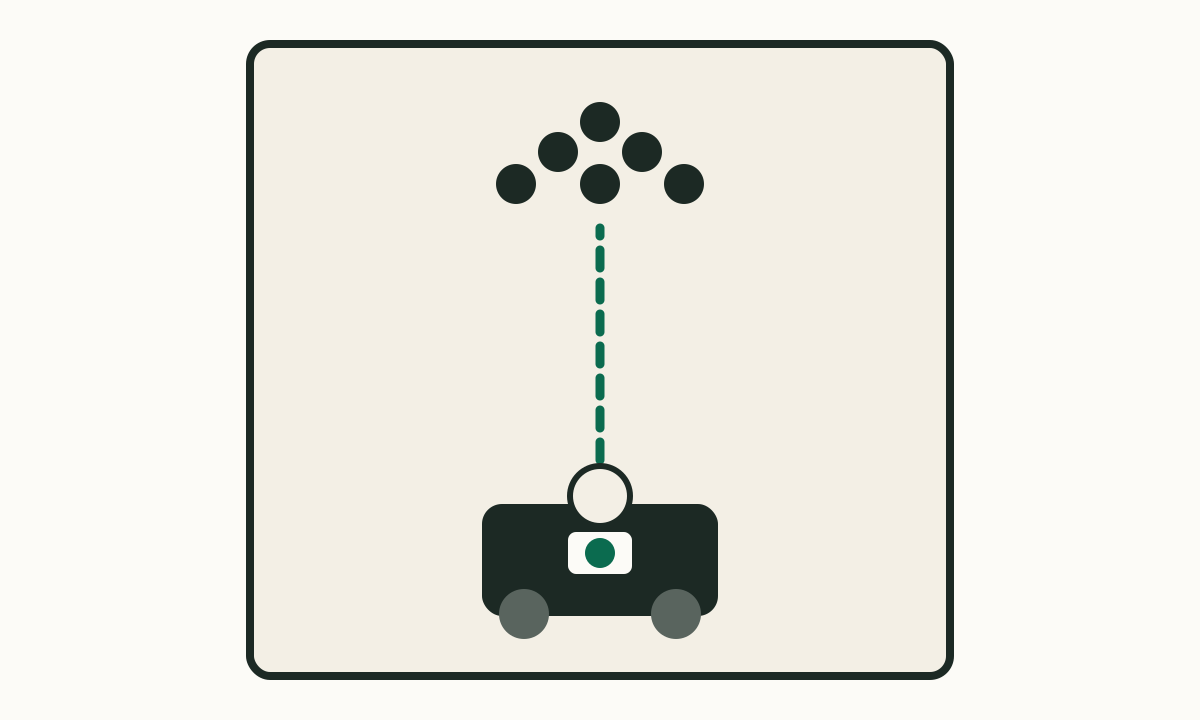
Conceptual team-system illustration.
01 / Context
The problem
A robot has to translate an image-space target into physical motion, then coordinate a release mechanism with that motion. The interface, camera, controller, and mechanism all have to agree on what happens next.
02 / Ownership
My contribution
I co-developed and helped test the team prototype. The team integrated camera-based targeting, MATLAB/Simulink control, an Arduino-driven rack-and-pinion carriage, and a servo release.
03 / Architecture
How it works
01
See
Use camera input and color/shape information to identify a target.
02
Aim
Translate the selected target into a carriage position.
03
Move
Use closed-loop carriage control to coordinate the mechanical system.
04
Release
Sequence the servo release and return behavior through the team interface and controller.
04 / Validation
Evidence & scope
Working physical prototype documented by the Clemson team.
A public team site provides the original project context.
A system that connects perception, control software, and mechanical actuation.
Project scope
Co-developed team prototype. The visual is a conceptual illustration of its camera, control, and release sequence.
Integration is a translation problem: pixels become a target, the target becomes a position, and the position becomes a timed action. Clear interfaces make the complete sequence easier to test.
 Avi Patel