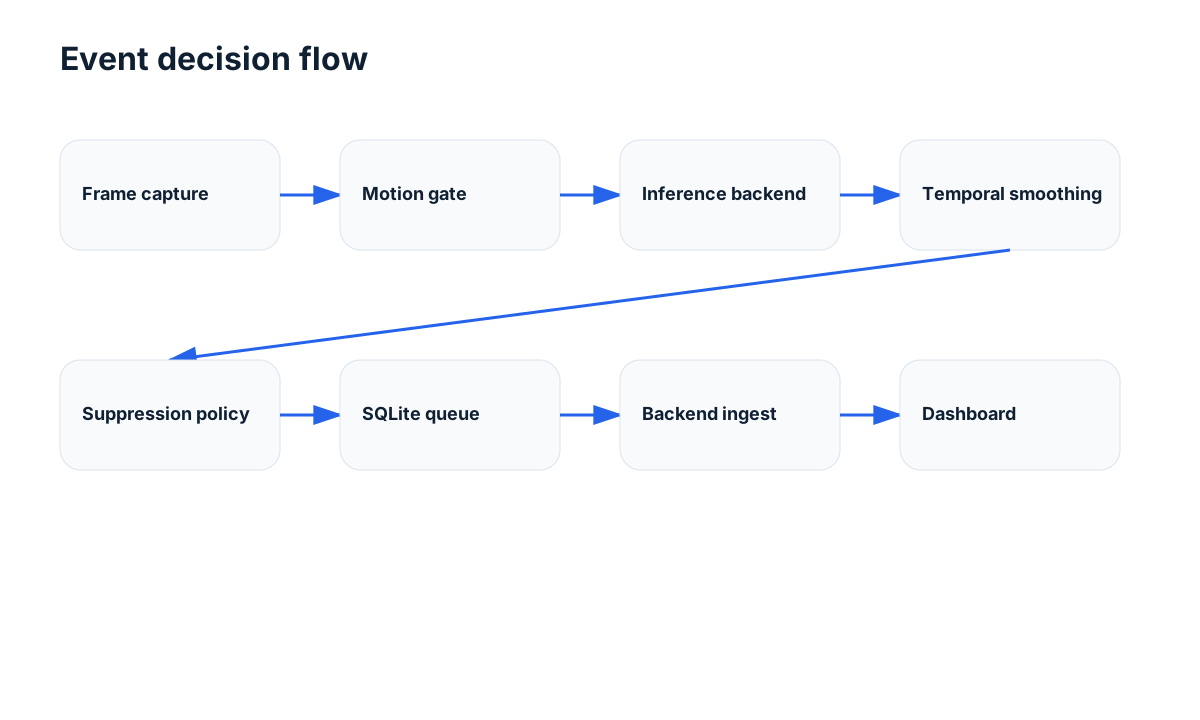
A detector output is only the beginning of an edge-vision product. Repeated detections can overwhelm an operator, and a temporary network outage should not silently erase the event history.
02 / Ownership
My contribution
I prototyped a C++17 runtime with temporal aggregation and alert suppression, a SQLite offline queue, and a FastAPI/backend-dashboard path. A replay harness makes the event flow inspectable before a live-camera deployment.
03 / Architecture
How it works
01
Ingest
Read replayed or synthetic detections into the edge runtime.
02
Aggregate
Group related events and suppress duplicate alerts over time.
03
Queue
Keep pending event information in a local SQLite queue.
04
Review
Expose events through the API and operator dashboard.
04 / Validation
Evidence & scope
Public C++ runtime, backend, dashboard, and architecture documentation.
Replay-oriented testing and deterministic input workflows.
An explicit event path spanning local processing, storage, and operator review.
Project scope
Replayed or synthetic detections. Complete live-camera/model deployment, field performance, and Raspberry Pi benchmarks are not established.
Reliable behavior around a model deserves its own tests. Replay makes it possible to reason about duplicate handling, queues, and event visibility without conflating those behaviors with model accuracy.
 Avi Patel